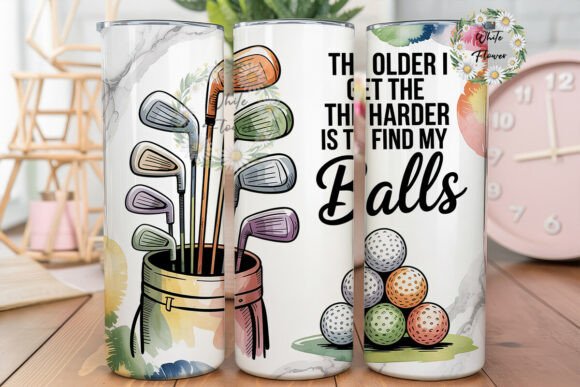
Funny Golf Clubs 20oz Tumbler Wrap Review
As a designer who spends more time staring at stitch maps than most people spend on their phones, I approach every new digital embroidery file with a mix of excitement and skepticism. We have all been there: you buy a design based on a pretty thumbnail, only to find out the stitch density is a nightmare or the details vanish once the needle hits the fabric. Today, I am taking a close look at the Funny Golf Clubs 20oz Tumbler Wrap. While the title suggests it is intended for sublimation or printing on Tumbler Wraps, my job is to evaluate how this graphic translates into the tactile world of thread and fabric for real-world embroidery projects.
First Impressions and Visual Personality
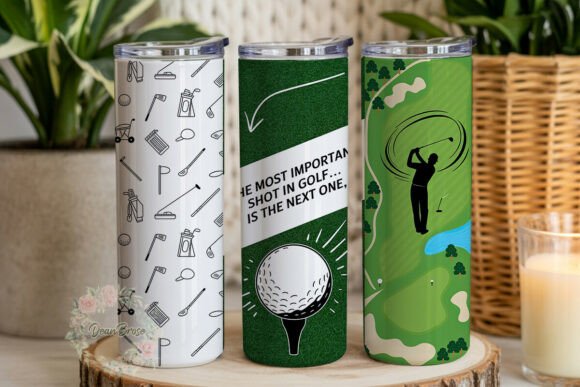
When I first pulled up the file, the immediate takeaway was the mood. Golf-themed designs often lean towards the overly serious or the cliché, but this one leans into humor, which is a massive plus for craft business owners looking to sell personalized gifts. The layout is designed to wrap around a cylindrical surface, measuring roughly 9.3 inches by 8.2 inches. In the world of embroidery, that is a substantial footprint. It screams "statement piece."
The visual personality here is casual and fun. If you are running a small shop product line focused on hobbyists or weekend warriors, this fits perfectly. However, because the original asset is a high-resolution graphic (300 DPI) meant for printing, translating this into a machine embroidery design requires some serious thought process regarding technique. You cannot simply drop this into your machine as-is; it needs to be interpreted. Are we talking satin stitch outlines? Dense fill stitch areas? Or perhaps an applique design approach to manage the large coverage area without turning the garment into a cardboard sheet?
Real-World Application: The Weekend Golfer's Hoodie
Let's move from theory to practice. Imagine a client comes to you needing a custom gift for their dad who refuses to take his golf game seriously. He loves a good laugh on the course. Instead of a tumbler, you decide to adapt this Funny Golf Clubs 20oz Tumbler Wrap concept onto a heavyweight cotton blend sweatshirt. This is where the rubber meets the road.
Because the design is wide, it works beautifully across the chest of a hoodie or as a large back print on a custom apparel item. The humor in the graphic ensures high engagement; people stop and look, which is exactly what you want for brand recognition if you are an Etsy seller building a niche following. However, the sheer size means you must consider the drape of the fabric. A design this large on a thin t-shirt will pull and pucker. For a project like this, I would recommend a sturdy fleece or French terry cloth that can support the weight of the thread.
If you are skilled with digitizing software, you could break this graphic down into color blocks for an embroidered patch application. Sewing a pre-made patch onto a tote bag design or a cap allows you to use the graphic without worrying about the stability of the base garment during the stitching process. This method also adds a premium feel to the finished product, increasing its perceived value.
Technical Challenges and Fabric Considerations
Here is the hard truth: this graphic was not born as an embroidery file. The description notes it is a graphic file, likely PNG or JPG, intended for sizing in image editing software. This means you do not have pre-set stitch types, underlay, or pull compensation. If you attempt to auto-digitize this, you risk creating a mess of running stitch connections and uneven coverage.
For those planning to use this on textured fabrics, proceed with caution. The intricate details of the "funny" elements might get lost in the loop of a towel or the nap of a fleece. Dark fabrics present another hurdle. If the design relies on light colors, you will need a significant amount of white underlay to prevent the garment color from bleeding through, which adds bulk. Conversely, on light fabrics, ensure your thread colors have enough contrast to make the joke land visually.
Curved surfaces are another factor. While the original intent is a straight or tapered tumbler wrap, applying this logic to a curved hat brim or a rounded pillow cover requires distortion adjustments. Without proper manipulation in your digitizing software, the circles in the golf clubs might look like ovals once stitched onto a dome shape. Always test on scrap fabric first. I cannot stress this enough. Waste a few dollars on scraps now to save your reputation later.
Maximizing Value for Small Business Owners
Why go through the trouble of adapting a graphic for embroidery? Because handmade presentation sells. A printed tumbler is common; a meticulously stitched sweatshirt embroidery featuring a unique, humorous design is a conversation starter. It builds customer trust. When a buyer sees the texture and quality of real thread, they understand the labor involved, justifying a higher price point for your handmade product.
This design asset is versatile. Beyond apparel, think about holiday embroidery for stockings, baby embroidery for oversized sibling shirts (maybe "Future Caddy"), or even home decor like a kitchen towel for the golfer who spends more time in the clubhouse than on the green. The key is consistency. If you use this style in your printable mockup previews, ensure the actual stitched item matches that energy. Discrepancies between the digital preview and the physical item are the fastest way to lose repeat customers.
Designer Notes for Successful Execution
Before you commit to producing these for your commercial embroidery lineup, keep these practical tips in mind:
- Check Licensing: Since this is sold as a graphic for tumbler wraps, verify if the license permits conversion into embroidery files for resale. Some creators allow personal use only.
- Stabilizer Selection: For a design of this magnitude, cut-away stabilizer is non-negotiable. Tear-away might seem easier, but it risks compromising the integrity of the stitches over time, especially on stretchy fabrics.
- Thread Contrast: Review the color palette. If the original graphic uses subtle gradients, you will need to simplify these into solid thread colors. Embroidery does not do gradients well without complex blending techniques.
- Hoop Size: Ensure your machine can handle the dimensions. You may need to split the design into sections if your hoop is smaller than the required 9x8 inch area, though splitting a continuous graphic can be tricky to align.
- Detail Inspection: Zoom in on the smallest text or finest lines. If they are thinner than 3mm, they might not stitch out cleanly. You may need to thicken lines manually in your digitizing software.
In conclusion, the Funny Golf Clubs 20oz Tumbler Wrap offers a fantastic foundation for creative entrepreneurs willing to put in the digitizing work. It is not a plug-and-play solution for embroidery, but for those with the skills to translate high-res graphics into stitch data, it represents a goldmine for creating unique, marketable goods. Whether you are making a one-off personalized gift or stocking inventory for a boutique, the potential for a high-quality finished product is undeniable. Just remember: respect the medium, test your stitches, and let the humor shine through the thread.