Mexican Folk Art Rooster: A Designer's Review
As a designer who spends more time staring at stitch maps than most people spend looking at their phones, I approach every new machine embroidery design with a mix of excitement and skepticism. We have all been there: you download a file that looks vibrant on the screen, only to find it turns into a puckered mess or a thread-breaking nightmare once it hits the fabric. Today, I am taking a close look at the Mexican Folk Art Rooster Skinny Tumbler. While the product listing categorizes this under Tumbler Wraps and Graphics, my job is to translate those digital assets into tangible, stitched reality for real-world projects.
First Impressions: Vibrancy Meets Complexity
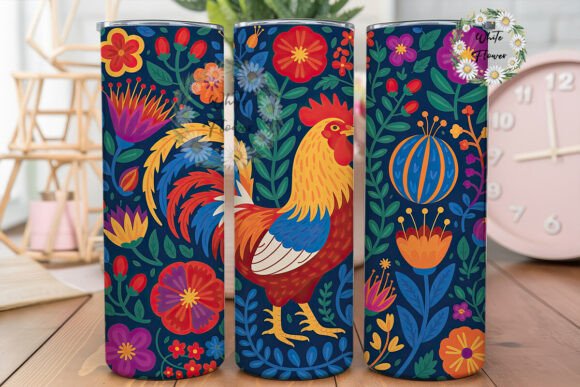
The first thing that strikes me about the Mexican Folk Art Rooster Skinny Tumbler is its undeniable visual personality. Mexican folk art is known for its bold colors, intricate patterns, and celebratory spirit, and this design captures that mood perfectly. The layout suggests a high level of detail, likely relying on a combination of satin stitch for the outlines and feathers, and dense fill stitch areas to create those rich, solid blocks of color typical of the style.
However, as an experienced reviewer, I immediately note the dimensions provided: 9.3" x 8.2". This is a substantial size. In the world of embroidery projects, a design of this magnitude demands respect. It is not something you can casually toss onto a small cap or a tiny baby bib without significant modification. The "Straight" and "Tapered" file options mentioned in the description suggest versatility for curved surfaces in print, but for embroidery, we need to think about how these shapes translate to flat or slightly curved textiles. The 300 DPI resolution indicates a crisp source image, which is excellent for creating clear printable mockups or analyzing detail before committing thread to fabric.
Real-World Application: The Boutique Apron Scenario
To truly evaluate this design, let's walk through a realistic scenario. Imagine I am preparing a custom order for a local café that wants branded merchandise. They have requested a line of heavy-duty canvas aprons featuring a vibrant rooster motif. This is where the Mexican Folk Art Rooster Skinny Tumbler could shine as a small shop product.
If I were to adapt this graphic for an apron, the 9.3-inch width would span nearly the entire chest area, making a bold statement. The intricate details of the rooster's plumage would serve as a fantastic conversation starter for customers. However, the transition from a digital embroidery file intended for a tumbler wrap to a textile application requires careful planning. The "tapered" version of the file might be useful if I were applying this to a structured item like a bucket hat, but for a flat apron, the straight file is likely the better starting point for resizing.
In this context, the design moves beyond a simple graphic; it becomes a centerpiece for commercial embroidery. The value proposition here is high. A well-executed piece of folk art on a quality garment elevates the perceived value of the handmade product. Customers are willing to pay a premium for items that feel unique and artistically driven, rather than mass-produced. This design has the potential to build customer trust and brand recognition if the stitching quality matches the vibrancy of the original art.
Navigating Fabric and Stitch Challenges
Let's be realistic about the challenges. Mexican folk art styles often involve tight curves and dense color changes. When translating the Mexican Folk Art Rooster Skinny Tumbler into stitches, stitch density is the critical factor. If the original graphic relies on fine lines to define the rooster's eyes or beak, these areas can easily become problematic on textured fabrics like towels or thick sweatshirts.
For sweatshirt embroidery, the loft of the fleece can swallow small details. I would advise testing this design on scrap fabric that matches your final product exactly. If you are working with a stretchy fabric like a t-shirt, the large surface area of this design increases the risk of distortion. You will absolutely need a high-quality cut-away stabilizer to support the weight of the threads and prevent the design from sagging over time.
Furthermore, consider the thread colors. Folk art palettes are often saturated. Ensure your thread library has enough variation to capture the gradients without resorting to excessive blending that slows down production. For dark fabrics, you may need to incorporate an underlay or even treat this as an applique design by adding a white backing layer to make the bright colors pop, though this adds steps to your workflow.
Strategic Use Cases for Craft Entrepreneurs
Beyond aprons, where else does this design fit? As an Etsy seller or creative entrepreneur, versatility is key. Here are a few practical applications:
- Tote Bag Design: The rectangular nature of the 9.3" x 8.2" sizing fits perfectly on the front of a standard canvas tote. It creates an eye-catching personalized gift for market days or festivals.
- Pillow Covers: Home decor is a huge market. This rooster could anchor a throw pillow cover, bringing a splash of cultural warmth to a living room. Just ensure the hoop size of your machine can accommodate the scaled design.
- Holiday Embroidery: Roosters are sometimes associated with specific cultural celebrations or general farmhouse aesthetics. This could be a standout item for spring collections or housewarming gifts.
- Embroidered Patch: If you have the capability to do free-standing lace or dense patch work, isolating the rooster element could create a fantastic iron-on patch, bypassing the need to embroider directly onto difficult garments.
Critical Designer Notes and Precautions
Before you commit to selling finished items based on the Mexican Folk Art Rooster Skinny Tumbler, there are several housekeeping items to address. First and foremost, verify the licensing. The description notes it is free of watermarks and high resolution, but it does not explicitly state the commercial license terms for embroidery conversion. Always confirm whether the creator allows the adaptation of their graphics into stitched formats for resale.
Secondly, test the design in black and white mockups. This helps you visualize the contrast and identify areas where running stitch details might get lost against busy backgrounds. Pay special attention to the corners and tiny lettering if any text is integrated into the folk art style; these are the first elements to degrade if the resize ratio is off.
Finally, remember that what works on a smooth tumbler wrap graphic does not always translate one-to-one to fabric. The fabric texture plays a massive role in the final outcome. A design that looks crisp on a screen might look jagged on a waffle-weave towel. My recommendation is to start with a smaller scale test on a similar material to gauge how the machine handles the density and color transitions.
In conclusion, the Mexican Folk Art Rooster Skinny Tumbler offers a rich, culturally vibrant aesthetic that can significantly enhance a craft business portfolio. Whether used for baby embroidery on a nursery blanket (scaled down appropriately) or as a bold statement on adult apparel, its success lies in the preparation. With the right stabilizer, thoughtful thread selection, and a clear understanding of the limitations of your hoop size and fabric choice, this design can be transformed from a digital asset into a stunning, tactile piece of art that customers will love.