Review: I Tried Today Zero Energy SVG for Embroidery
As a designer who spends more time staring at stitch previews than actual fabric, I am always skeptical of "funny" vector art when it crosses over into the physical world of machine embroidery design. There is a distinct gap between a crisp digital graphic and a finished product that survives the wash cycle. Recently, I got my hands on the I Tried Today Zero Energy SVG Funny file to see if this grumpy raccoon concept holds up under the needle. My goal was simple: determine if this is just another cute internet image or a viable asset for a serious craft business.
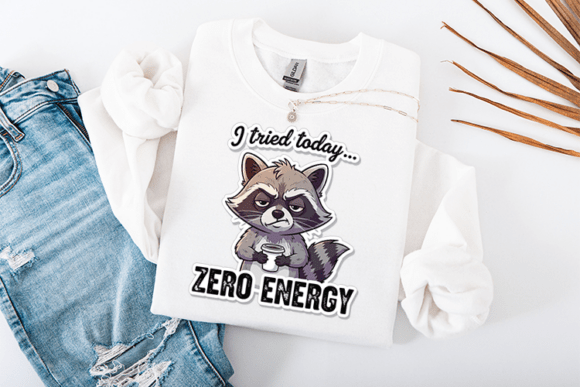
The first impression of the design is undeniably strong. The theme hits a specific cultural nerve—the exhaustion of modern life—personified by a "trash panda" clutching a coffee cup. Visually, the layout is compact and centered, which immediately suggests versatility. However, from a technical standpoint, converting a Graphics file meant for T-Shirt Designs into a stitched reality requires careful scrutiny. The charm lies in the raccoon's expression; if the digitizing loses the nuance of those tired eyes or the slump of the shoulders, the joke falls flat. Fortunately, the line work appears clean enough to translate well, provided the stitch types are chosen correctly.
Real-World Application: The Sweatshirt Test
To truly evaluate the I Tried Today Zero Energy SVG Funny design, I simulated a real client order. Imagine a customer walking into a boutique shop asking for a custom gift for their burnt-out best friend. They want something cozy but funny. This is where the design shines. I envisioned placing this on a heather grey crewneck sweatshirt. The texture of the fleece provides a great backdrop for the raccoon, allowing the fill stitch areas to sink in slightly while the outlining satin stitch pops.
In this scenario, the embroidery project becomes more than just decoration; it becomes a conversation starter. When stitched onto a high-quality garment, the finished product exudes a level of professionalism that a printed tee simply cannot match. The tactile nature of the thread adds value, making it an ideal personalized gift or a standout item for an Etsy seller looking to differentiate their small shop product lineup. The relatable message combined with the sturdy feel of embroidery creates immediate buyer engagement.
Navigating Fabric Textures and Hoop Constraints
While the design concept is solid, practical application reveals some constraints every apparel decorator must consider. The raccoon features detailed elements, particularly around the face and the coffee cup handle. If you are working with a hoop size that forces the design to be scaled down significantly, you risk losing these defining characteristics. Tiny details can become muddy blobs if the stitch density is too high for the scale.
Fabric choice is equally critical. On smooth, woven cotton like a tote bag or a tea towel, the I Tried Today Zero Energy SVG Funny design will look sharp and defined. However, moving to textured fabrics like waffle knit or heavy terrycloth requires adjustment. The uneven surface can cause the needle to skip or the threads to bury themselves, obscuring the grumpy expression. Furthermore, stretchy fabrics present a challenge. Without the proper stabilizer, the movement of the fabric during stitching can distort the raccoon's shape, turning a funny design into a warped mess. For custom apparel made of jersey knits, I strongly recommend using a cut-away stabilizer to maintain integrity over time.
Commercial Viability and Brand Consistency
For digital product sellers and creative entrepreneurs, the question isn't just "does it look good?" but "does it sell?" This design fits perfectly into the current market trend of self-care and humor. It works exceptionally well for holiday embroidery gifts, particularly for teachers or healthcare workers who often resonate with the "zero energy" sentiment. As a design asset, it offers flexibility. It can be used for embroidered patch creation, applied to caps, or even adapted for baby embroidery on onesies (with appropriate color changes to soften the mood).
However, consistency is key to building customer trust. If you are selling this as part of a collection, ensure your thread colors remain consistent across different batches. A raccoon that looks brown in one batch and grey in another can confuse buyers. Additionally, when creating printable mockups for your online store, ensure the digital representation accurately reflects the texture of the stitches. Over-promising on the crispness of the design in photos can lead to disappointment when the handmade product arrives.
Critical Designer Notes for Execution
Before committing this design to a final piece of inventory, there are several technical steps I advise every maker to take. First, always test the design on scrap fabric that matches your final material. This allows you to check the running stitch outlines and ensure there is no puckering. Second, review the contrast of your thread colors. The original SVG might rely on specific shades, but in thread form, you may need to adjust hues to ensure the raccoon stands out against dark or light backgrounds.
Pay close attention to small lettering if the design includes text elements alongside the graphic. Small text can easily become unreadable if the stitch count is too low or the font is too thin. If you plan to use this on curved surfaces like hats, verify that the design has been properly digitized for that specific curvature to avoid distortion. Finally, and perhaps most importantly, confirm the licensing terms. While the description suggests it is a digital design suitable for various uses, you must verify if it allows for commercial embroidery projects or if it is restricted to personal use only. Never assume; always read the fine print before selling finished items.
In conclusion, the I Tried Today Zero Energy SVG Funny design is a promising candidate for a wide range of embroidery applications. Its strength lies in its relatability and compact composition. However, its success depends entirely on the skill of the operator and the quality of the setup. By respecting the limitations of fabric texture, hoop size, and stitch density, you can transform this simple vector into a high-value boutique product that resonates with customers and stands the test of time.