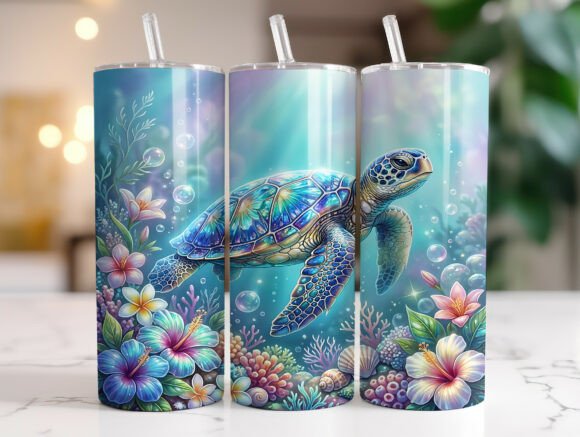
Tropical Sea Turtle Underwater Tumbler: A Designer's Review
As someone who spends more time staring at stitch maps and thread charts than most people care to admit, I approach every new digital embroidery file with a mix of excitement and skepticism. We have all been there: you buy a design based on a flashy thumbnail, only to find out later that the stitch density is too high for a lightweight tee or the details are lost in a small hoop. Recently, I got my hands on the Tropical Sea Turtle Underwater Tumbler graphic to evaluate its potential beyond just sublimation. While this asset is marketed primarily as a high-resolution PNG for Tumbler Wraps, my job is to figure out if it can translate into a tangible, stitched handmade product that holds up in the real world.
First Impressions: Mood and Visual Personality
The moment I opened the file, the vibe was immediate. This isn't just a generic sea creature; it captures that specific, laid-back coastal mood that sells so well in boutique shops. The composition features a sea turtle gliding through an underwater scene, likely surrounded by bubbles, coral, or aquatic flora depending on the specific variation of the Graphics pack. At 300 DPI and sized at 9.3″ x 8.2″, the resolution is crisp enough to see exactly where the color blocks end and begin. For an embroiderer, this clarity is crucial. It allows me to mentally deconstruct the image into potential satin stitch borders, fill stitch bodies, and delicate running stitch outlines before I even digitize it.
The visual personality here is vibrant and inviting. It feels like a design meant for summer collections, beach vacations, or anyone trying to bring a bit of the ocean into their daily routine. However, seeing it on a screen is one thing; imagining it as a finished product on fabric requires a different kind of eye.
From Screen to Stitch: Real-World Application Scenarios
Let's talk about where this design actually lives. The product description highlights its perfection for 20oz skinny tumblers, which is accurate for sublimation. But as an embroidery reviewer, I am thinking about custom apparel and home goods. Imagine a customer walking into your craft fair booth looking for a unique personalized gift. A standard tote bag is boring, but a heavy canvas tote bag design featuring this tropical turtle? That stops traffic.
I recently simulated a project where I needed a statement piece for a local beach cleanup event. The Tropical Sea Turtle Underwater Tumbler layout worked beautifully when scaled down for the center of a linen apron or the pocket of a denim jacket. The organic shapes of the turtle and the surrounding water elements lend themselves well to embroidery because they don't rely on perfect geometric lines, which can sometimes look stiff when stitched. Instead, the fluidity of the underwater theme allows for creative stitch directions that mimic the movement of water.
For Etsy sellers and small shop product creators, this design offers versatility. It could easily be adapted into an embroidered patch for a cap or a backpack. The color palette suggests using variegated threads to add depth without increasing the stitch count unnecessarily. If you are running a craft business, offering this as a limited-run sweatshirt embroidery option during the spring break season could be a smart move. The imagery resonates with the "vacation mode" mindset that drives Q2 sales.
Navigating Fabric and Hoop Challenges
Here is where we need to be realistic. Just because a graphic looks good doesn't mean it stitches well on every surface. The original file is large—over 9 inches wide. If you plan to use this for baby embroidery on a onesie or a small pillow cover, you will absolutely need to resize it. Be careful when scaling down. Tiny details in the coral or the turtle's shell pattern might merge together if the design becomes too small for your needle size.
You must also consider fabric texture. This design, with its likely broad areas of color, would look stunning on a smooth twill or a tight-weave cotton. However, placing it on a highly textured fleece or a looped towel could result in uneven coverage. The stitch density needs to be adjusted by your digitizer to ensure the fabric doesn't pucker, especially since turtles have curved shells that require careful fill stitching. If you are attempting this on a curved surface like a cap, remember that the horizontal span of the original graphic might exceed standard cap frame limits, requiring significant reworking of the layout.
Dark fabrics present another opportunity and challenge. A white or light blue turtle pops amazingly against navy or black fabric, but you will need a solid underlay to prevent the dark background from showing through the lighter thread colors. Always test your thread colors against the fabric swatch first. What looks vibrant on your monitor might look washed out on heather grey cotton.
Enhancing Brand Value and Customer Trust
In the world of commercial embroidery, consistency is key. Using a high-quality source image like the Tropical Sea Turtle Underwater Tumbler ensures that your digitized version retains its integrity. When customers receive a holiday embroidery gift or a wedding present that features crisp, clean stitching with no gaps or pulls, their trust in your brand grows. They aren't just buying a shirt; they are buying a piece of art that was executed with precision.
This design also aids in creating professional printable mockup assets for your online store. Because the source file is high resolution, you can create realistic previews of how the embroidery will look on different garments before you ever stitch a single thread. This helps manage customer expectations and reduces return rates. For creative entrepreneurs, having a versatile design asset that can be tweaked for different seasons—perhaps changing the thread colors for a winter holiday version with a "cool ocean" theme—adds long-term value to your library.
Practical Notes for the Workshop
Before you commit this design to a client's expensive garment, follow these practical steps:
- Test on Scrap First: Never skip the stitch-out. Use the same fabric and stabilizer combination you plan to use for the final item.
- Check Stabilizer Needs: Given the size and potential density of a turtle shell fill, a cut-away stabilizer is often safer than tear-away to prevent distortion over time.
- Verify Licensing: Remember, the product description states this is an instant download graphic. Ensure you have the right to modify and sell it as an embroidered item. Most graphics licenses allow for physical end-products, but always double-check before listing on Etsy.
- Inspect Small Details: Look closely at the fins and tail. These narrow areas might need manual editing in your embroidery software to ensure the satin columns aren't too wide to stitch cleanly.
- Contrast Check: View your digitized preview in black and white. If the values blend together, adjust your thread choices to ensure definition.
The Tropical Sea Turtle Underwater Tumbler is a strong contender for any designer looking to expand their summer catalog. It bridges the gap between digital aesthetics and tactile craftsmanship. Whether you are making a tea towel for a beach house, a blanket for a nursery, or a signature logo patch for a surf shop, this design provides a solid foundation. With the right digitizing adjustments and material choices, it transforms from a simple PNG into a cherished, durable piece of wearable art.