Uplifting Dragonfly Watercolor Tumbler Review
As a designer who spends more time staring at stitch simulations than I do sleeping, I approach every new digital embroidery file with a mix of curiosity and skepticism. When I first opened the Uplifting Dragonfly Watercolor Tumbler, my immediate reaction wasn't just about the aesthetic; it was about translation. How does a watercolor graphic, inherently soft and fluid, translate into the rigid, textured reality of thread? This isn't just a pretty picture for a sublimation wrap; for us in the stitching world, it represents a challenge in capturing mood without losing definition.
The design arrives with specific instructions to size it to 9.3" x 8.2", offering both straight and tapered files. While the product category lists this under Tumbler Wraps and Graphics, my mind immediately went to textile applications. A dragonfly motif suggests lightness and nature, but the "watercolor" aspect implies gradient blending and soft edges that can be notoriously difficult to replicate with standard fill stitch techniques. The resolution is listed at 300 DPI, which is excellent for reference, but remember: in our trade, DPI matters less than how the digitizer has mapped those pixels to actual thread paths.
Translating Soft Edges into Stitch Reality
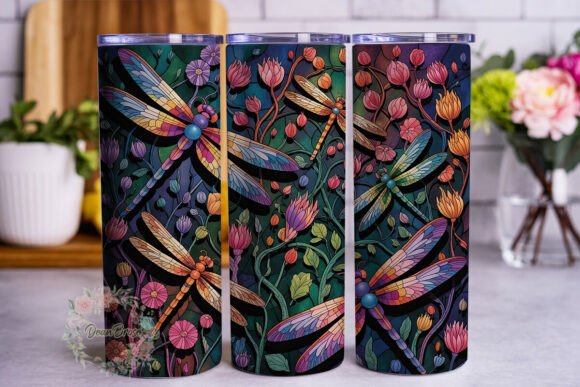
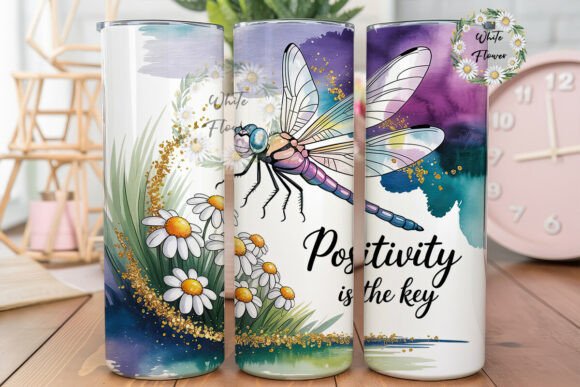
The first thing I noticed about the Uplifting Dragonfly Watercolor Tumbler is its visual personality. It feels airy and optimistic, perfect for spring collections or wellness-themed branding. However, when you are preparing a machine embroidery design based on this graphic, you have to consider the stitch density. Watercolor effects usually rely on subtle shifts in color saturation. If the digitization is too dense, you lose that ethereal quality and end up with a heavy, plastic-looking patch. If it's too light, the fabric shows through, breaking the illusion of the artwork.
In a real-world scenario, imagine you are creating a custom tote bag for a local farmer's market vendor who wants to sell eco-friendly goods. They love the dragonfly theme. Using this design as a base, you would need to carefully select your thread colors. Instead of trying to match every single shade in the watercolor gradient, I recommend simplifying the palette. Choose three or four dominant hues that capture the essence of the image. This approach ensures that the finished product looks intentional rather than muddy. The shape of the dragonfly wings offers a great opportunity to utilize satin stitch borders to define the edges against a softer fill stitch interior, giving the design structure while maintaining the artistic vibe.
Ideal Applications Beyond the Tumbler
While the file is marketed for tumbler wraps, limiting this graphic to hard goods would be a missed opportunity for Etsy sellers and craft business owners. The composition works beautifully for sweatshirt embroidery, particularly on the back yoke of a oversized crewneck. The 9.3-inch width allows for a statement piece that doesn't overwhelm the garment. I can easily picture this on a heather grey fleece, where the texture of the fabric complements the organic feel of the dragonfly.
For those running a boutique shop, consider applying this to home decor. A pillow cover made from linen or canvas provides a stable base that handles detailed embroidery well. The natural slub of linen can actually enhance the watercolor effect, making the stitches look more like part of the fabric weave. It also serves as an excellent personalized gift for gardeners or nature lovers. If you are creating holiday embroidery gifts, perhaps for a Mother's Day collection, this design strikes the right balance between elegant and casual. It avoids the overly cutesy trap that many insect designs fall into, leaning instead into a sophisticated, artistic direction.
Navigating Fabric and Hoop Challenges
Practicality is where many beautiful designs fail, so let's talk about where you need to exercise caution. The Uplifting Dragonfly Watercolor Tumbler has a relatively large footprint. If you intend to use this on a cap, you must verify your hoop size capabilities. Most standard cap frames struggle with widths over 5 inches, so this design likely requires a jumbo hoop or a re-digitized version specifically scaled down for curved surfaces. Attempting to force a 9-inch design onto a small hat frame will result in distortion and registration issues.
Fabric choice is equally critical. Because watercolor styles often involve large areas of coverage, stretchy fabrics like thin jersey knits can be problematic. The weight of the thread may cause the fabric to pucker or sag over time. For baby embroidery projects, where softness is paramount, I would advise using this design only on sturdy interlocks or placing it on a patch that is then sewn onto the garment. This isolates the stiffness of the stitching from the delicate skin of the wearer. Additionally, dark fabrics require careful planning. If the original graphic relies on white space for highlights, you will need to incorporate an underlay or a background fill to ensure the colors pop against black or navy material. Without this step, the design will look dull and lost.
Maximizing Value and Professionalism
From a business perspective, the perceived value of a handmade product often hinges on the clarity of the design. A blurry or poorly stitched dragonfly looks like a mistake; a crisp, well-executed one looks like art. The Uplifting Dragonfly Watercolor Tumbler has the potential to elevate your brand consistency if used correctly. It signals to customers that you pay attention to detail and appreciate artistic nuance. This builds trust, which is essential for commercial embroidery clients who are ordering bulk items for their own branding.
When creating printable mockups for your online store, ensure you represent the texture of the thread accurately. Don't just paste the flat graphic onto a photo of a shirt. Show the dimensionality. Customers buying custom apparel want to know what the tactile experience will be. Does it feel rough? Is it raised? Managing these expectations through honest presentation reduces returns and increases buyer engagement.
Essential Designer Notes for Execution
Before you commit to stitching this on a client's expensive jacket, follow these practical steps:
- Test on Scrap First: Always run a test stitch-out on the exact fabric you plan to use. This reveals issues with puckering or thread breaks that aren't visible on screen.
- Check Stabilizer: Given the likely density of a watercolor-style fill, use a high-quality cut-away stabilizer for knits and tear-away for wovens. Do not skimp here; the stability of the design depends on it.
- Review Small Details: Inspect the tips of the dragonfly wings and any fine lines. If they are too thin for your machine's needle or thread weight, you may need to manually edit the file to thicken those areas.
- Contrast Check: View your thread chart in black and white. If the different shades of blue or green blend into a single gray mass, you need to increase the contrast between thread colors to maintain definition.
- Licensing Verification: The product description mentions it is free of watermarks, but always confirm the license terms regarding commercial use. Can you sell the finished embroidered item? Can you sell the digitized file itself? Clarity here protects your small shop product line from legal headaches.
Ultimately, the Uplifting Dragonfly Watercolor Tumbler is a versatile asset that bridges the gap between digital art and tactile craft. It requires a thoughtful hand to execute, but for the creative entrepreneur willing to put in the prep work, it offers a pathway to creating stunning, memorable pieces. Whether it ends up on a tote bag design, a cozy blanket, or yes, even a tumbler wrap adapted for a textured sleeve, the key lies in respecting the medium. Thread has its own language, and this design speaks it well if you listen closely to the details.